
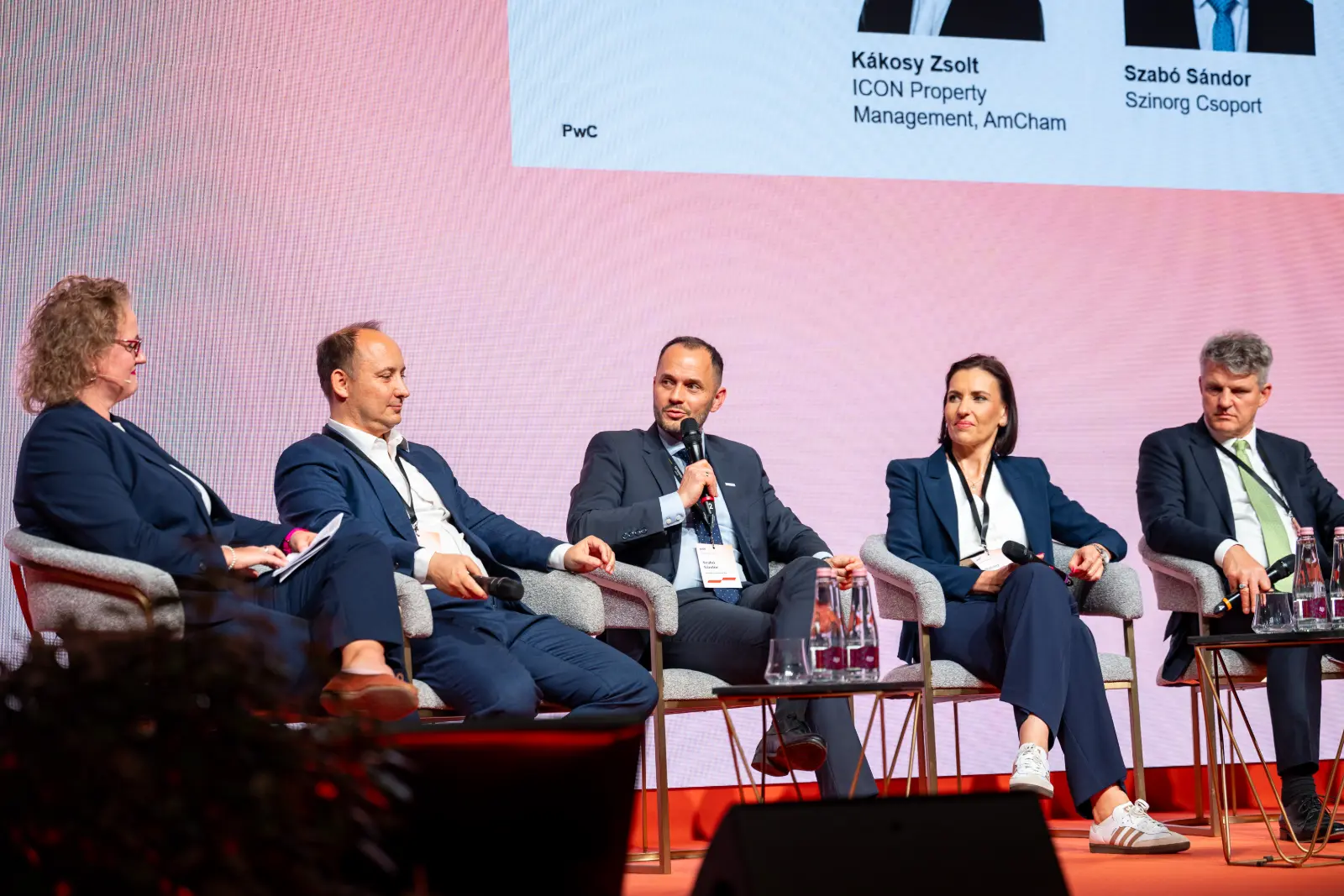
The PwC Hungary Business Forum 2026 was held in Debrecen on 14 May, focusing on the economic development of Eastern Hungary, current investment in the region and future-proof directions for growth. One of the programme's highlights was a round-table discussion on the growth prospects of Debrecen, Nyíregyháza and Miskolc, where the Group was represented by Sándor Szabó, Chief Executive Officer and Member of the Board of SZINORG Universal Zrt.
Participants shared their experience of the region's economic transformation, the current challenges in the property market and the opportunities ahead for housing. Sándor Szabó set out continuously improving competitiveness as a business priority, alongside establishing new processes that support greater efficiency and sustainable operation over the long term.
That professional dialogue continued at the Portfolio Debrecen Economic Forum 2026, held on 9 June at Hotel Divinus in Debrecen. The conference focused on regional growth prospects, current questions facing the Hungarian economy, investment in Debrecen, financing options, and the market forces shaping the future of the city and its region.
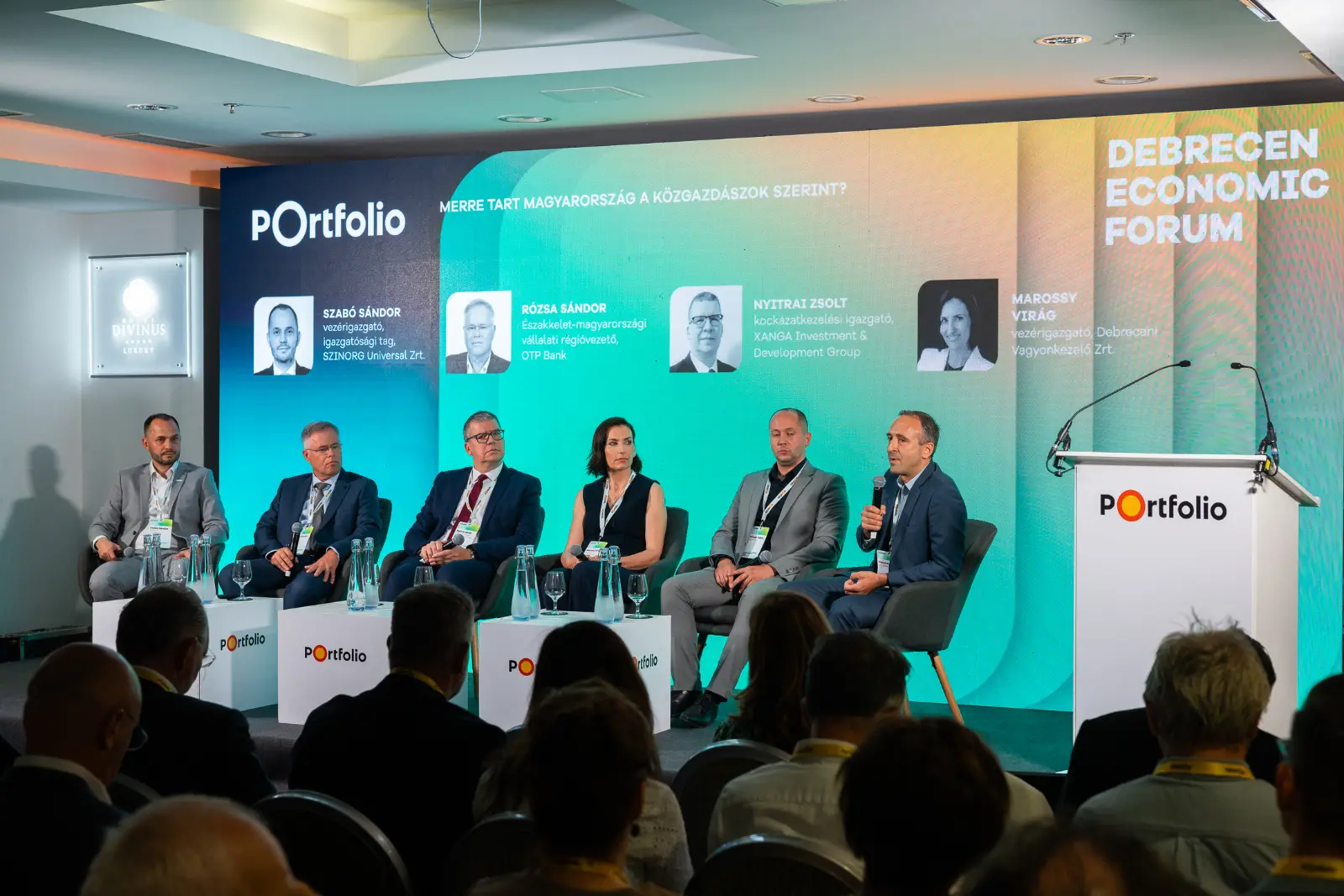
SZINORG Group was again represented by Sándor Szabó, who took part in the session "Debrecen's trajectory, economic breakthrough in Eastern Hungary and the strains on the labour market". The round-table "New momentum: how current conditions are affecting development in Debrecen" was moderated by Zoltán Pécskay, Managing Director of EDC Debrecen.
The panel addressed the step change in Debrecen's economy over the past decade. The large-scale investments made in the city have created a significant number of new jobs, and with that has come an increasingly pressing question: where the workforce needed for further growth will come from, and on what terms. The discussion gave particular weight to the widening of Debrecen's catchment area, the role of the agglomeration, changing housing needs, the rental market, and residential development and its financing conditions.
Participants also touched on tourism and hospitality, the diversified structure of Debrecen's economy, and the further tasks and opportunities that may shape the city's long-term development. One clear conclusion was that Debrecen's growth is no longer a question for any single sector: industrial investment, housing, tourism, services, the financing environment and infrastructure shape the city's future as an interconnected system.
Portfolio's preparatory materials also showed that Debrecen's economic growth is creating a new situation for real-estate development. Alongside price, location and basic technical specifications, sustainable, energy-efficient and technologically flexible solutions are becoming steadily more important.
In Sándor Szabó's view, the technology side is gaining in importance in parallel: storage aligned to the just-in-time logic of supply chains, the requirements of specialised production processes and intelligent building management systems are all now part of competitive industrial development. Equally, a modern, people-centred working environment — natural light, well-designed shared spaces and employee comfort — can contribute directly to tenants' HR and retention objectives.
The shared message of both events is that the development of Debrecen and Eastern Hungary is a complex question spanning the economy, the property market, the labour market and infrastructure. For SZINORG Group, taking an active part in the professional dialogue shaping the future of Debrecen and its region matters a great deal.